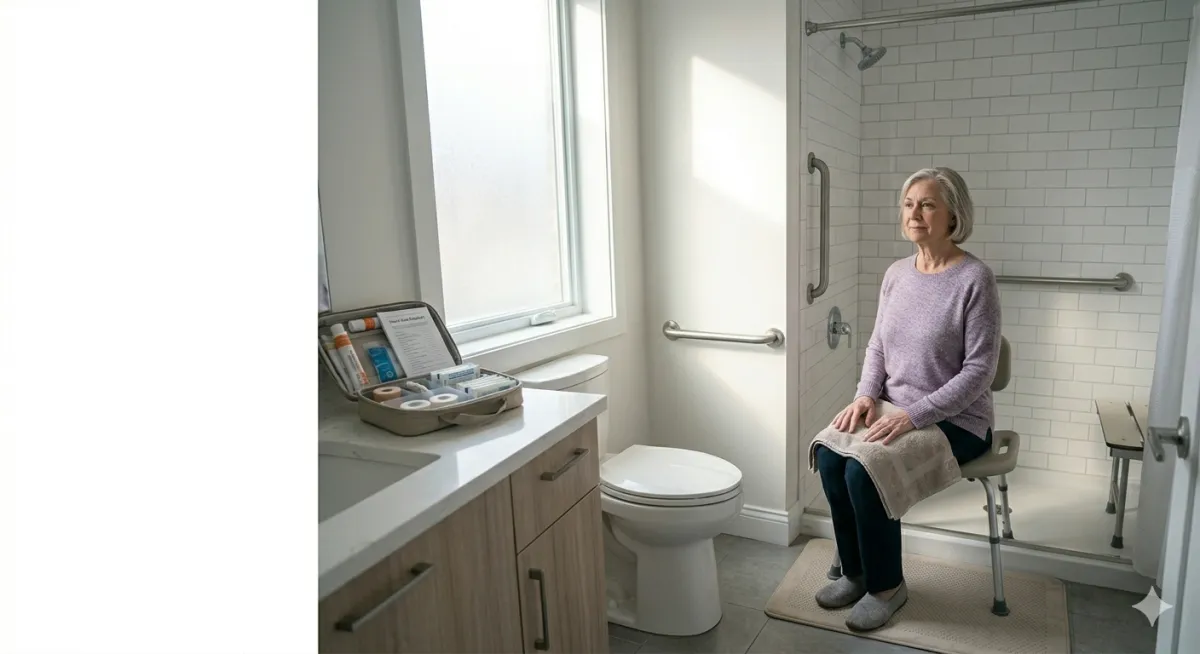
Home Safety for Seniors: Why Your Bathroom Might Be Your Biggest Risk | Burlington Pharmacy
If I had to name the room in the house that looks harmless but causes the most quiet trouble for older adults, I would not say the stairs first.
I would say the bathroom.
That is because the bathroom combines almost every fall risk in one place: slippery surfaces, tight turns, hard flooring, wet hands, balance changes, dim overnight lighting, and the need to sit, stand, step, and pivot in a hurry. The CDC says falls are a major threat to older adults’ health and independence, and the National Institute on Aging specifically recommends bathroom safety changes like grab bars, nonskid surfaces, and better lighting to reduce fall risk.
For families in New Jersey, that makes Bathroom safety NJ, senior independence, and DME Burlington much more than search terms. They are practical decisions that affect whether an older adult feels confident at home. Burlington Pharmacy’s website says it offers Home Health Equipment, Bathroom Safety products such as grab bars, shower seats, and rails, and free delivery anywhere in New Jersey from 301 High St, Burlington, NJ 08016.
Why is the bathroom such a common trouble spot?
The bathroom asks a lot from the body in a very small space.
I may need to:
step over a tub edge
stand on wet tile
lower myself onto a toilet
get back up safely
twist while drying off
move around when I am tired or rushing
That is exactly why the National Institute on Aging highlights the bathroom as a room that needs specific fall-prevention attention, including grab bars near toilets and inside and outside the tub or shower, plus nonskid strips or mats on wet surfaces. The NIA’s 2025 home-safety tips for older adults repeat the same message: install grab bars near the toilet and shower, and reduce slipping hazards on wet surfaces.
So when I think about senior home safety, I do not see the bathroom as a side issue. I see it as one of the first places to fix.
Why is “I’m still pretty steady” not enough?
A lot of falls happen to people who did not think of themselves as fragile.
That is one reason this topic is so easy to delay. The CDC says falls can reduce an older adult’s ability to remain independent, but also says falls do not have to be inevitable with age if people take prevention seriously.
The bathroom is especially tricky because even a small change in balance, strength, or reaction time can matter more there than in a living room or bedroom. Wet floors and hard surfaces do not leave much room for recovery once someone starts slipping.
That is why senior independence and bathroom safety really go together. The right equipment is not about making a person feel weaker. It is about helping them keep doing daily routines more safely.
Grab bars: the item everyone knows about, but many still avoid
If I had to name the most important bathroom safety upgrade, grab bars would be near the top.
The NIA specifically recommends mounting grab bars near toilets and on both the inside and outside of the tub and shower. UCLA Health’s 2025 bathroom-fall article also recommends secure grab bars near the shower and toilet as a core safety step.
That matters because grab bars help with exactly the movements that tend to cause problems:
sitting down
standing up
stepping in and out of the shower
catching balance when footing slips
This is where Burlington Pharmacy fits naturally. Its site specifically lists grab bars under its Bathroom Safety offerings, which makes it a practical source for families trying to reduce risk without turning the whole house upside down.
Shower seats: when standing to bathe becomes a risk
A lot of people focus on toilet support first and underestimate the shower.
But the shower is often one of the highest-risk moments of the day because it combines water, soap, slippery surfaces, and fatigue all at once. The National Council on Aging’s 2025 home-modification guidance specifically recommends a shower seat, grab bar, and adjustable-height handheld shower head as useful fall-prevention modifications. UCLA Health also emphasizes the value of reducing slip risks in wet areas.
If I notice that standing to bathe feels tiring, unsteady, or rushed, a shower seat is not “giving up.” It is making the task safer and more manageable.
Burlington Pharmacy’s site lists shower seats directly in its Bathroom Safety section, which is exactly the kind of practical DME support many families need but often do not think about until after a scare.
Rails, supports, and the small items that prevent big problems
Sometimes the best safety upgrade is not dramatic.
A rail, support handle, or simple bath-safety accessory can change how safe a bathroom feels day to day. The NIA and NCOA both support this idea by emphasizing small home modifications like support equipment, improved lighting, and safer surfaces to lower fall risk.
That is why I think bathroom safety works best when I do not ask, “What is the single best product?” Instead, I ask:
Where is the person most likely to slip?
Where do they struggle to sit or stand?
Where do they need to stabilize with one hand?
Which moment feels least secure?
Burlington Pharmacy’s Bathroom Safety category includes rails in addition to grab bars and shower seats, which fit this more customized approach.
Lighting is one of the most ignored safety upgrades
A lot of people think bathroom safety means equipment only.
But lighting is a huge part of the problem. The NIA says older adults should leave a light on in the bathroom at night or use a night light that turns on automatically in the dark. UCLA Health’s 2025 guidance also recommends brightening dim bathrooms and using night lighting for overnight trips.
That matters because many bathroom falls do not happen during a calm daytime routine. They happen:
overnight
when someone is sleepy
when they are rushing
when depth perception is worse in low light
So even before I buy equipment, I would check whether the room is actually bright enough to move around safely.
Nonslip surfaces are just as important as supports
A grab bar helps if I reach it. A nonslip surface helps before I start falling in the first place.
The NIA recommends nonskid mats, strips, or other slip-resistant surfaces in wet bathroom areas, and its 2025 home-safety tips say the same. UCLA Health also advises using nonslip strips or mats in the tub or shower and removing loose rugs that can slide.
That is one reason bathroom safety is not solved by one item alone. A safer bathroom usually combines:
better grip underfoot
stable support near transfers
easier seating in the shower
improved lighting
less clutter
The best bathroom setup is the one that preserves independence
This is the part I think families need to hear most.
A lot of older adults resist bathroom safety changes because they sound like signs of decline. But the better way to frame them is as tools that protect independence. The CDC says falls can reduce the ability to remain independent, which means prevention is not only about avoiding injury. It is about preserving routine and confidence.
That is why DME Burlington matters in a practical, not abstract, way. Durable medical equipment is there to support safer daily living. Burlington Pharmacy’s site says it carries hard-to-find DME to support independence and safety at home, which is exactly the right way to think about bathroom safety products.
How would I think through what to buy first?
If I were helping a parent, spouse, or older patient think this through, I would prioritize based on the real point of risk.
If getting in and out of the shower feels unstable
I would look first at:
grab bars
shower seats
nonslip strips or mats
If sitting down and standing up from the toilet feels harder
I would focus on:
grab bars near the toilet
rails or supports positioned for transfers
If nighttime bathroom trips feel risky
I would focus on:
better lighting
automatic night lights
clearing clutter and loose rugs
If the person tires easily while bathing
I would focus on:
a shower seat
support bars
making the shower routine less physically demanding
These priorities line up well with the equipment Burlington Pharmacy already highlights on its website.
Why does Burlington Pharmacy fit this conversation well?
Based on its website, Burlington Pharmacy is especially well-positioned for this topic because it already offers the exact categories families look for when the bathroom starts to feel less safe:
Bathroom Safety
Home Health Equipment
free delivery anywhere in New Jersey
local service from Burlington, NJ
That makes it a practical local fit for searches like Bathroom safety NJ and DME Burlington. Instead of forcing families to search all over for separate pieces, the pharmacy is already presenting itself as a source for the most common home-safety needs.
Check our Home Health Equipment section for Bathroom Safety and related support equipment.
Final thoughts
If I want to make a home safer for an older adult, I do not need to wait for a major fall to tell me the bathroom is a problem.
The CDC says falls threaten health and independence, and the NIA’s room-by-room guidance makes it very clear that the bathroom deserves special attention through grab bars, nonslip surfaces, and better lighting.
That is why the bathroom may be the biggest risk in the home, but it is also one of the most fixable. And because Burlington Pharmacy already offers grab bars, shower seats, rails, and broader Home Health Equipment, it gives New Jersey families a practical place to start making that room safer.
